Leo Triplett (M 65, M 66, NGC 3628)
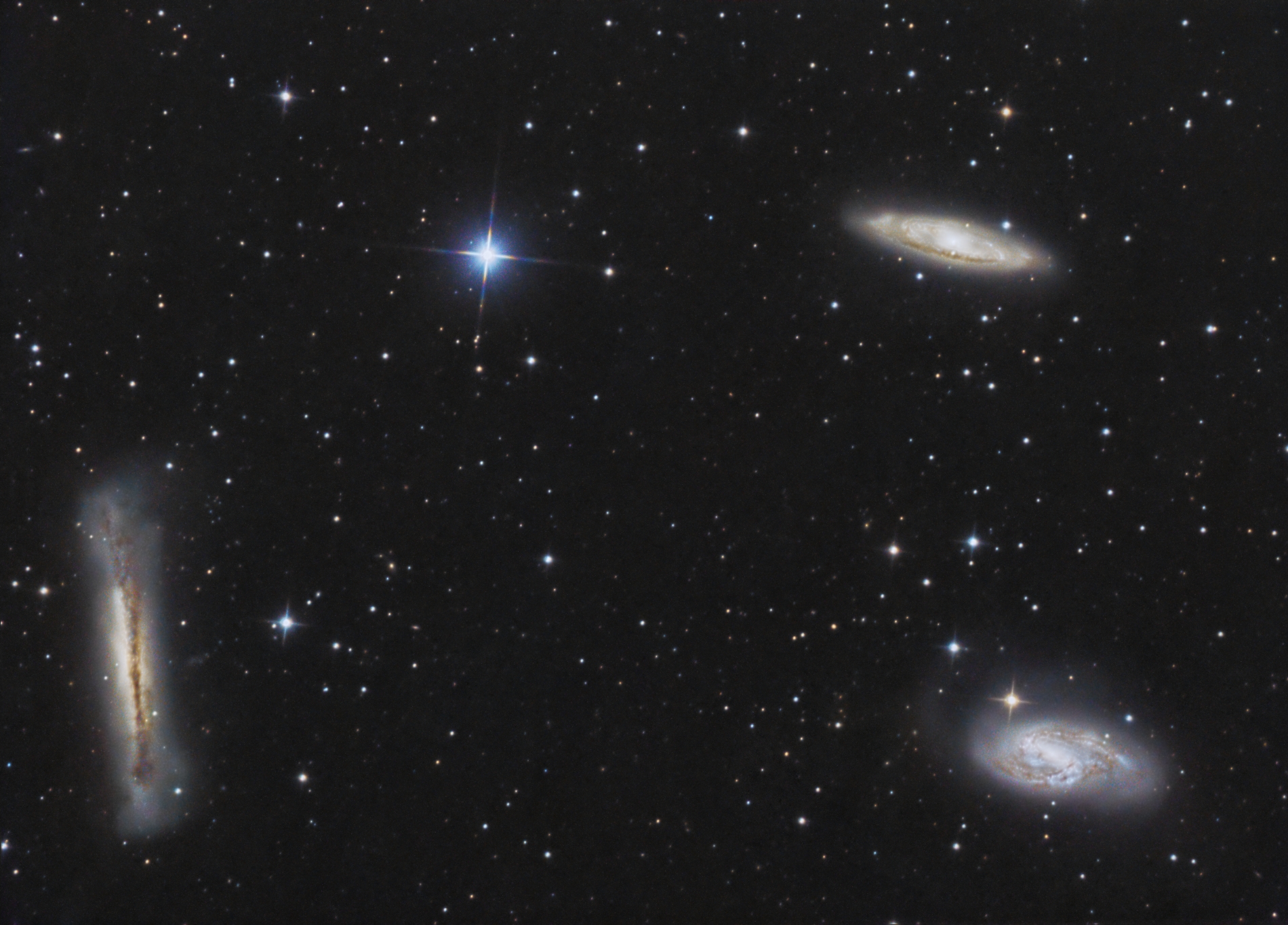
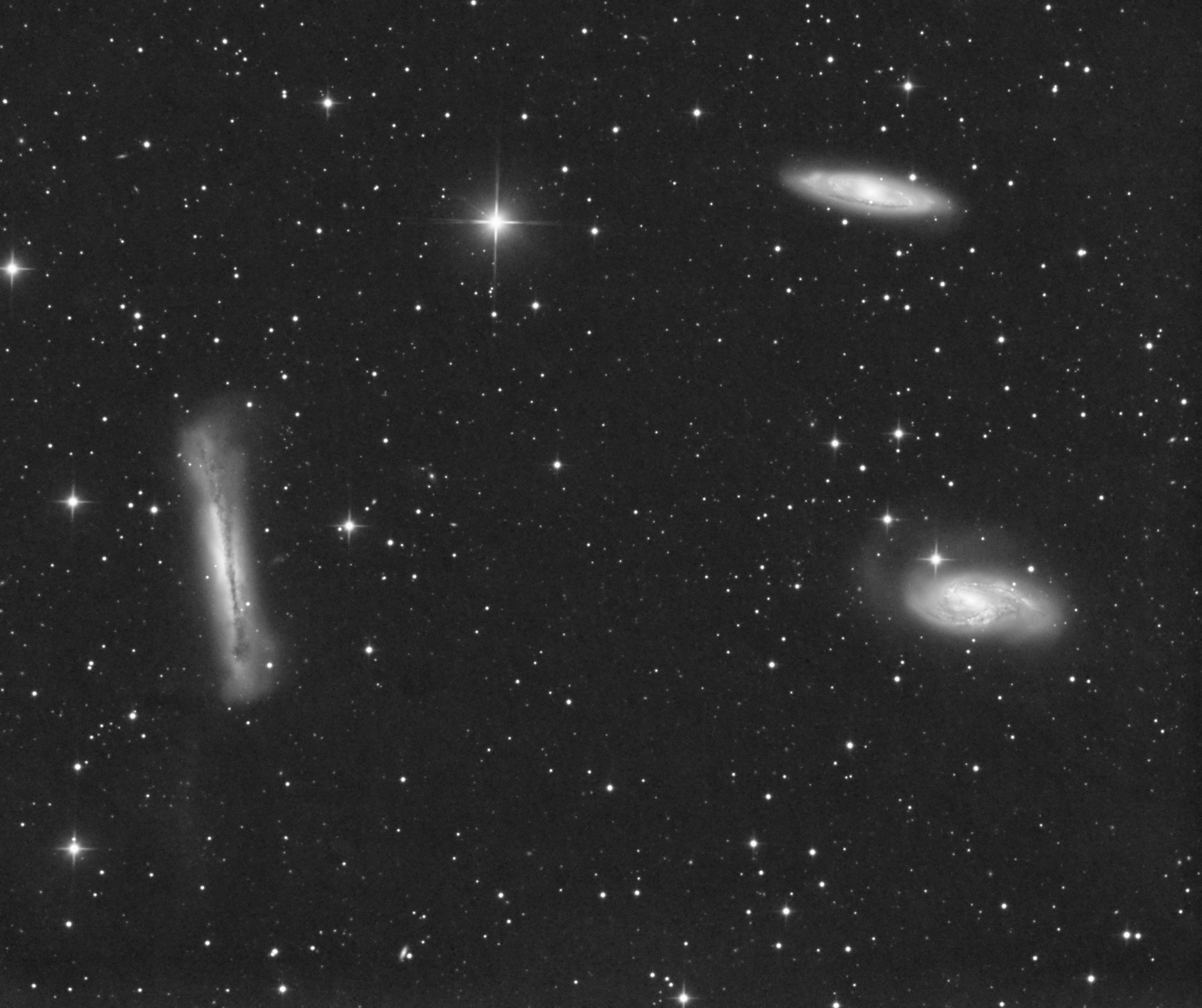
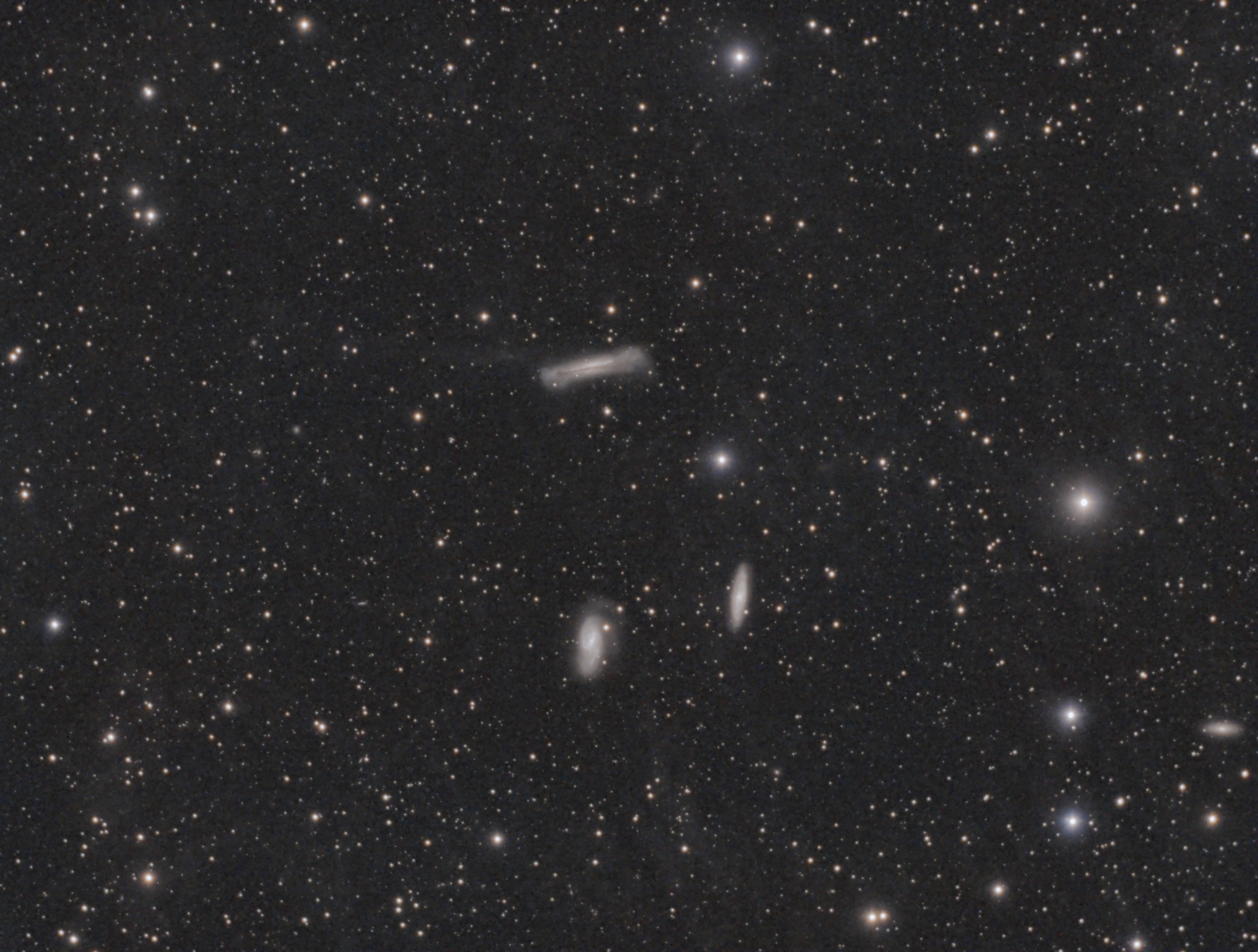
The Leo Triplet consists of the three spiral galaxies M66, M65, and NGC 3628. It is also known as the M66 group and is located 36 million light-years away.
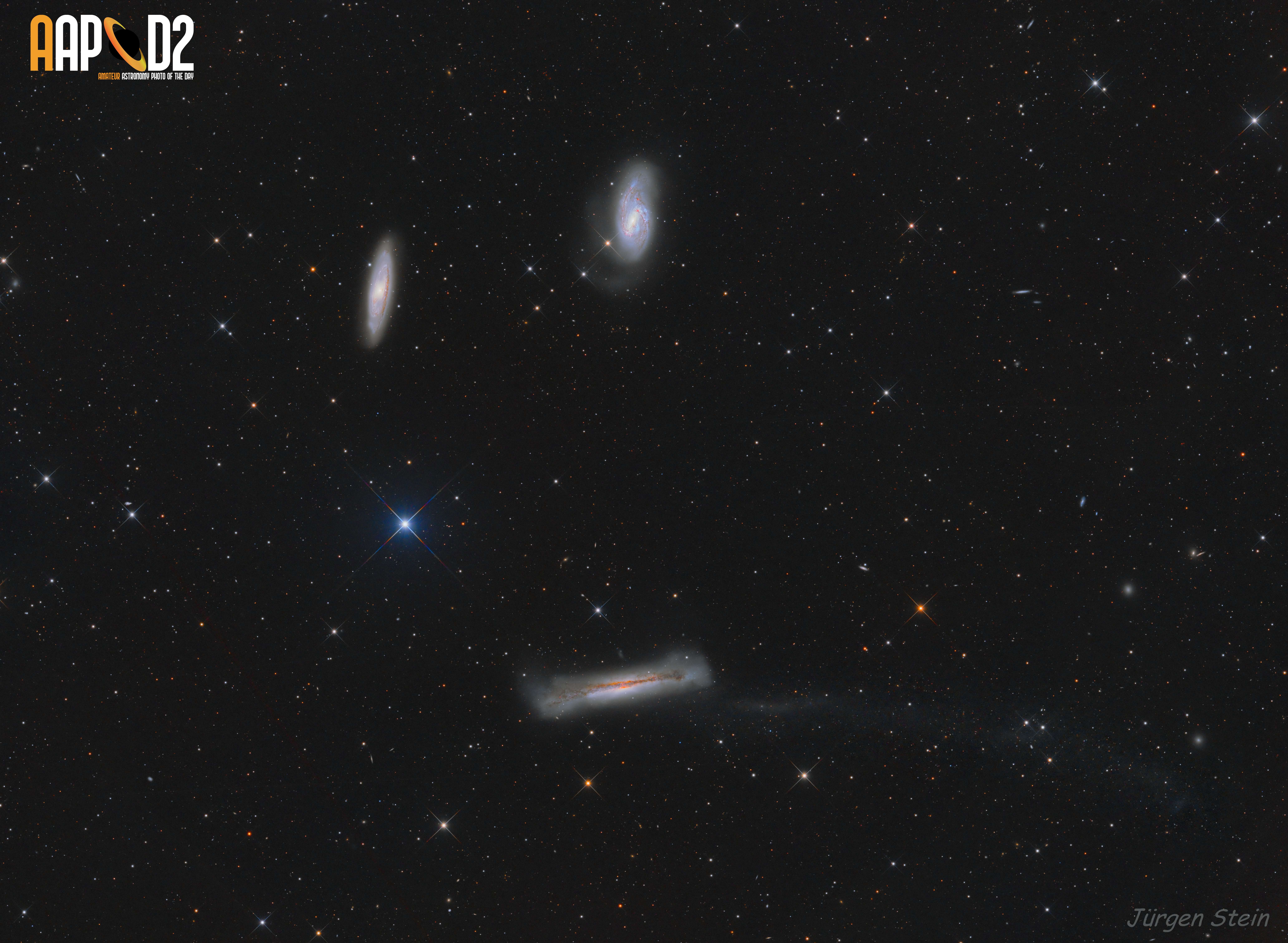
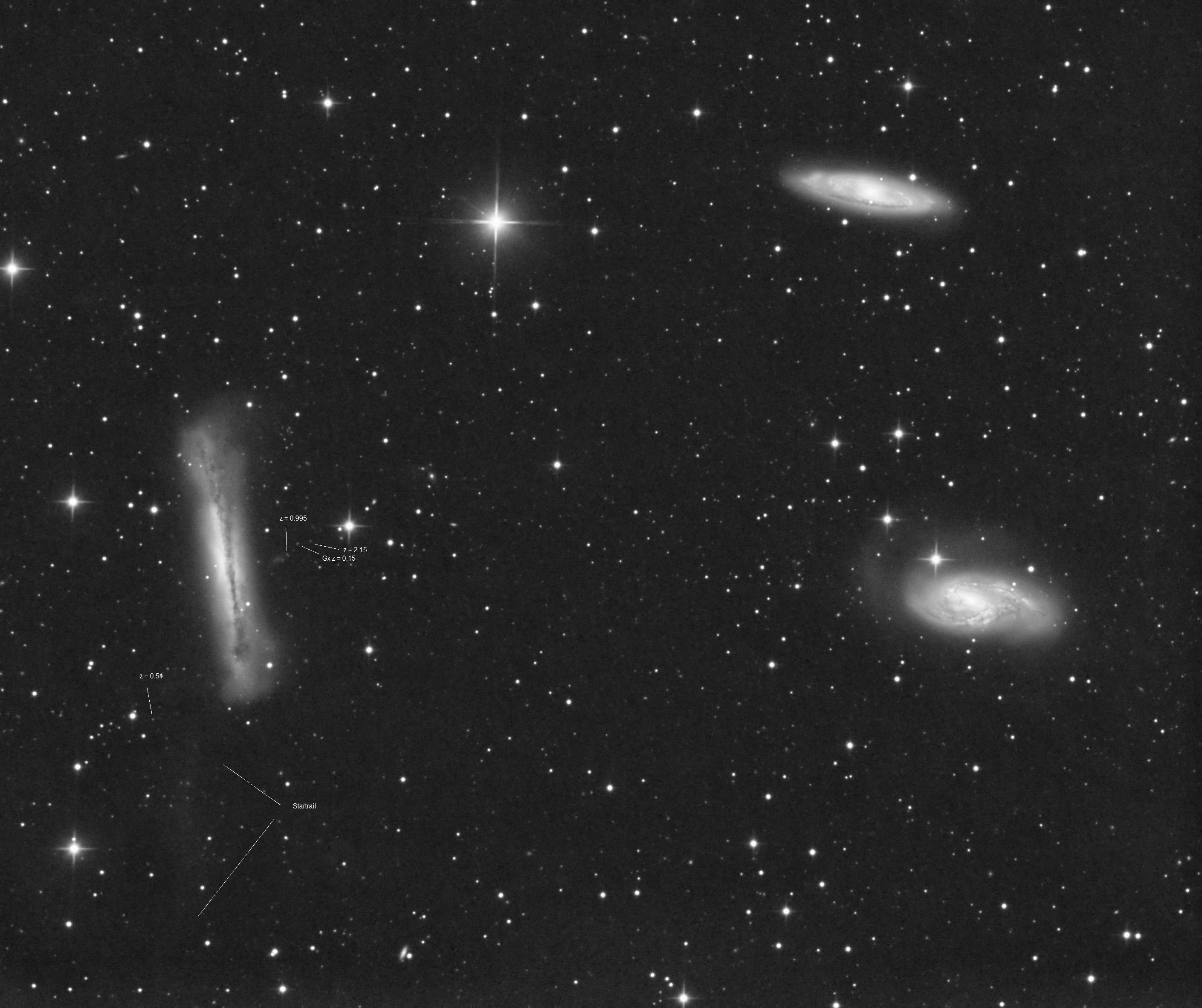
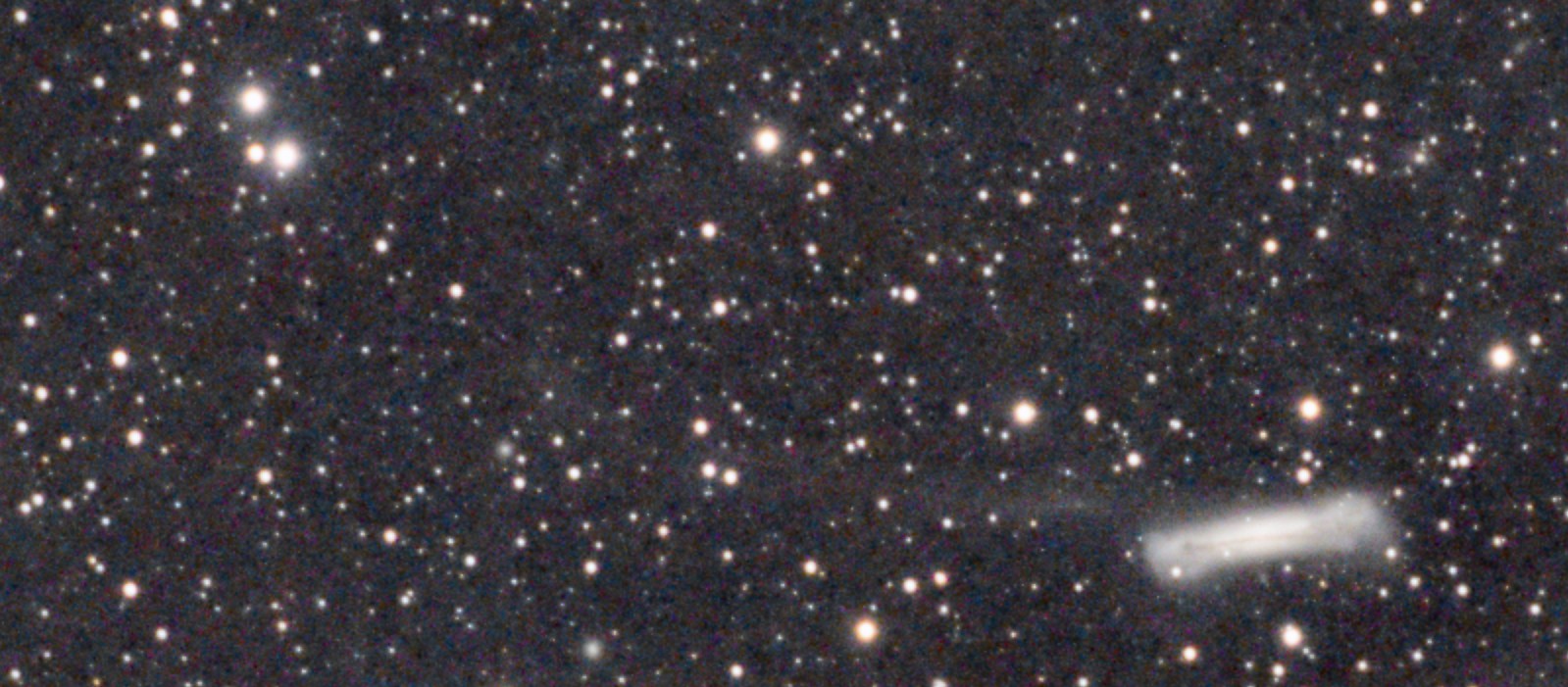
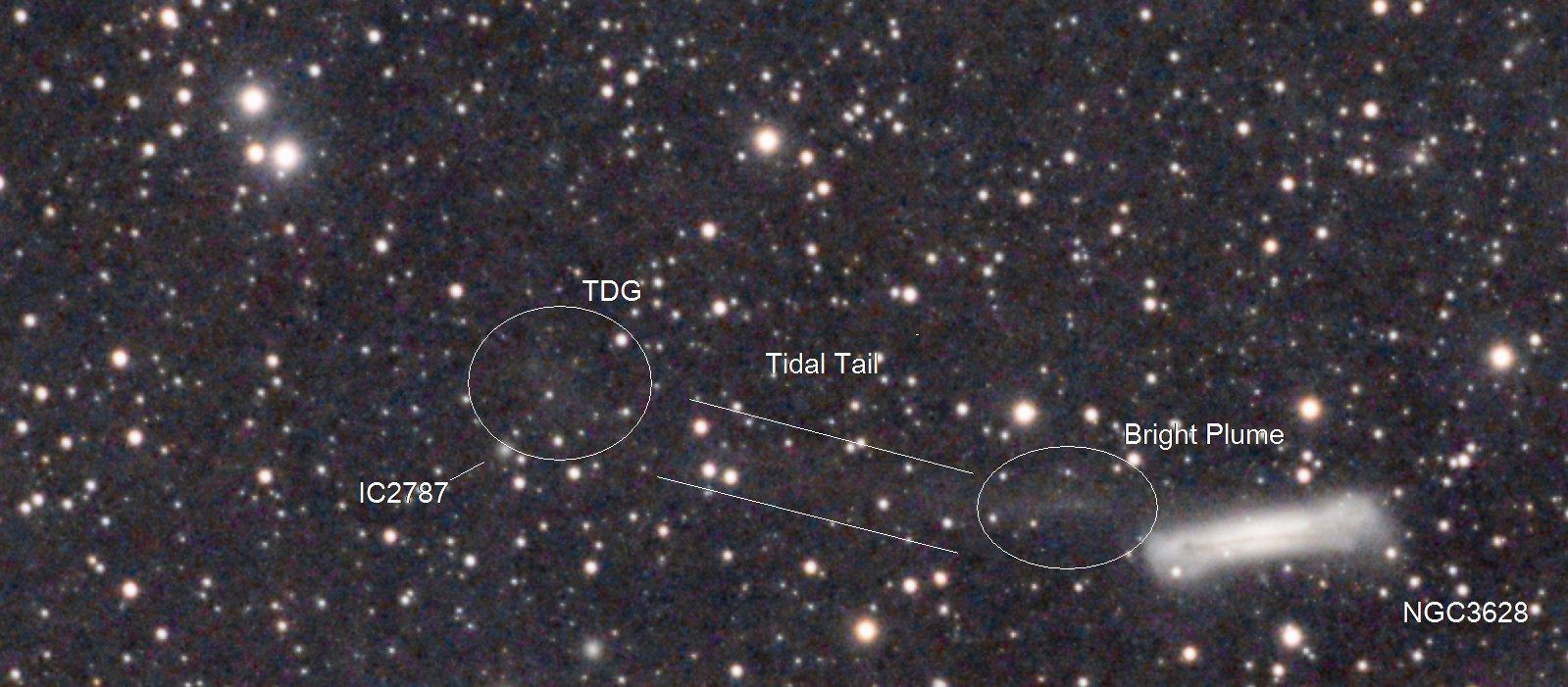
The galaxy NGC 3628 is perhaps one of the most interesting bright galaxies. One striking feature associated with this galaxy is a long tidal star tail approximately 300,000 light-years long. NGC 3628 itself is about 160,000 light-years long. The tail is believed to consist of stars that were torn off the galaxy either when a small dwarf galaxy passed by or during a close encounter of NGC 3628 and M66.
The mass of the tail is about 15% of that of the large galaxy, and its surface brightness is about 26.5 mag/arcsec^2. The stars in the tail have an age of several hundred million years, corresponding to a close encounter of NGC 3628 and M66 about 800 million years ago.
In 2014, a tidal dwarf galaxy was discovered at the end of the tail.
"The Leo Triplet, also known as the M66 Group, is a stunning collection of three interacting spiral galaxies located about 35 million light-years away in the constellation Leo. This trio comprises the galaxies M65, M66, and NGC 3628. The gravitational interactions between these galaxies create fascinating tidal features, most notably the prominent tidal tail extending from NGC 3628. This tail is composed of stars and gas pulled out from the galaxy due to the gravitational forces exerted by its neighbors.
In this image, the delicate structure of the tidal tail is beautifully captured, highlighting the dynamic nature of galactic interactions. The Leo Triplet offers a unique opportunity to observe the effects of gravitational forces on galaxy morphology and evolution. Detailed imaging and study of these features help astronomers understand the processes that shape galaxies and the role of tidal interactions in galactic development. Observing the Leo Triplet with such clarity provides not only a visually striking display but also a wealth of scientific insights into the mechanics of our universe." (ref. www.aapod2.com)